What diplomats actually do
And, why it’s important to the average citizen
When he was inaugurated in January 2025, Donald Trump vowed to build the ‘strongest military the world has ever seen,’ and he put teeth in that promise by submitting a $1.01 trillion Defense Department budget for fiscal year 2026. Since then, he has shown a proclivity for the use of military force to deal with international problems, such as his attack on Iran’s nuclear sites and the predawn raid on Venezuela and seizure of its president. All this, despite his other claim during his inaugural address that he wanted to be remembered as a ‘peacemaker and a unifier.’
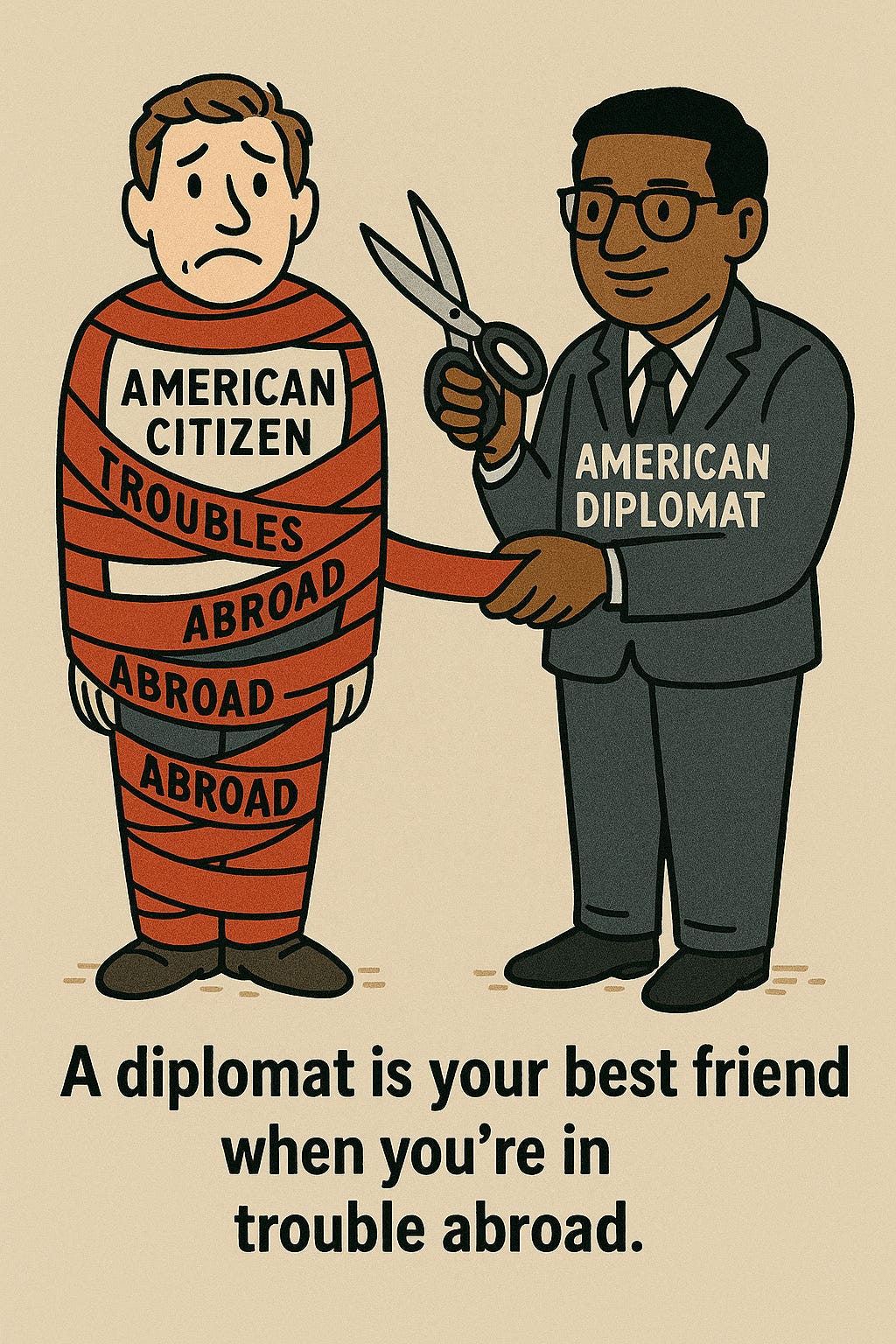
His actions since assuming office have been anything but peaceful or unifying, though. He dismantled the US Agency for International Development (USAID) and began to diminish the country’s diplomatic capability, including by firing some of the State Department’s most experienced diplomats. These are the eyes, ears, and voice of the United States abroad; people who protect American interests and citizens, keep policymakers informed of what’s happening in foreign countries, and build support for American policy. One of the often-overlooked but critical roles of American diplomats—one that neither Trump nor any of his senior officials seems to appreciate or understand—is protecting American interests and citizens. This is not a high-level policy concern only for politicians or senior bureaucrats, but rather bread-and-butter issues that affect the lives of ordinary citizens.
Diplomats represent their country’s interests abroad, facilitating communication and fostering relationships between governments, but for the average citizen, it’s the work they do to protect them as they visit, work, or even reside abroad that really needs to be appreciated. The following are some of the things that diplomats do that have nothing to do with high-level foreign policy, but do impact those of us who live outside the Washington, DC Beltway.
Protection of nationals (those from the diplomat’s home country) is often listed near the bottom of the list of diplomatic duties, but for an American who is traveling abroad, it’s a number one priority.
Diplomats assist nationals who have run afoul of the law. This doesn’t mean that they can get a person out of prison, but under the Vienna Convention, countries are required to notify a country’s diplomatic mission when they arrest that country’s nationals. Diplomats then visit the incarcerated individuals, helping establish communication with their family back home, and attempting to ensure they get fair treatment and their human rights are not violated. They maintain lists of qualified lawyers and provide them to nationals who need legal representation. Ensuring a national’s human rights are respected can be complicated when their country is trampling on those rights back home, though.
Medical emergencies are traumatic no matter when and where they occur but can be a special nightmare if they occur in a foreign country where you don’t know the language or customs. This is another area where diplomats can be literal lifesavers. When I was a young vice consul in China in 1983, an elderly American fell off the landing ladder of an aircraft and suffered a serious head injury. She had to be taken to a local hospital for emergency surgery, where a small part of her damaged brain had to be removed. In a coma, she was unable to talk, and the hospital staff spoke no English. They knew enough to notify the consulate general, and I was assigned to the case. I used her passport to determine her stateside address and contacted her family. They were unable to travel to China, so for the six months she was in the hospital, until she was well enough to be transported to the United States, I was a surrogate family member, visiting her every day and keeping her family informed of her condition. And when she regained consciousness and could talk, I kept her company and reassured her that things would be okay.
Diplomats issue birth certifications for the children of American citizens when they’re born abroad, issue death certificates for Americans who die abroad, and help Americans get new travel documents when theirs are lost, destroyed, or stolen.
The diplomats who provide these essential services to their nationals abroad can do so effectively only after intensive training and experience. They know local languages, laws, and culture, having acquired them over years of experience. This, and the other functions of a diplomat—such as negotiation, reporting and analyzing developments in foreign countries, and advocating for their home nation’s policies — are not things that someone with no training or experience in diplomacy can do easily or effectively. Regardless of how much success a person has had as, say, CEO of a small manufacturing company, operating in a foreign culture is not something you can do effectively by flying in and spending a few hours talking to senior government officials of a country you’ve never been to before.
As a citizen, when you travel abroad—for whatever reason—you have a right to expect competent assistance from your government. That means that it’s in your best interests to demand that the government build, not destroy, a professional, non-partisan diplomatic service. Professional diplomacy is a critical tool for maintaining international stability, resolving conflicts, and promoting economic growth and human rights. Professional diplomats can balance their government’s interests with those of other countries to achieve outcomes that benefit everyone involved. Most importantly, though, they are there when you, the average citizen, need them and are capable of providing the service you need.